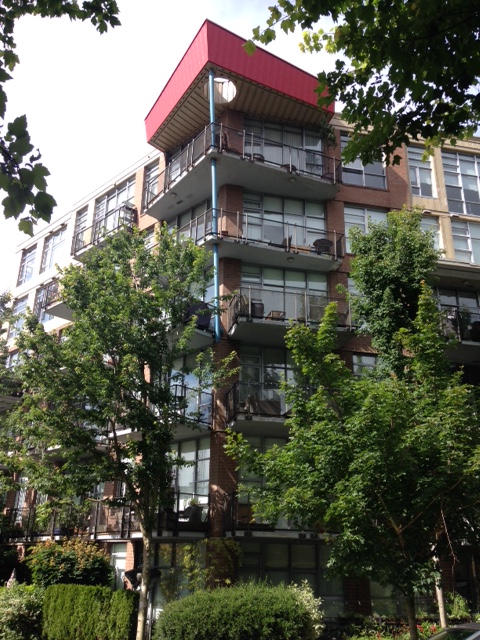
We will be meeting at the Roundhouse Plaza in Yaletown at 2pm. More info here: http://janeswalk.org/canada/vancouver/tour-false-creek-north-neighbourhood/
Author: Tjbamonte
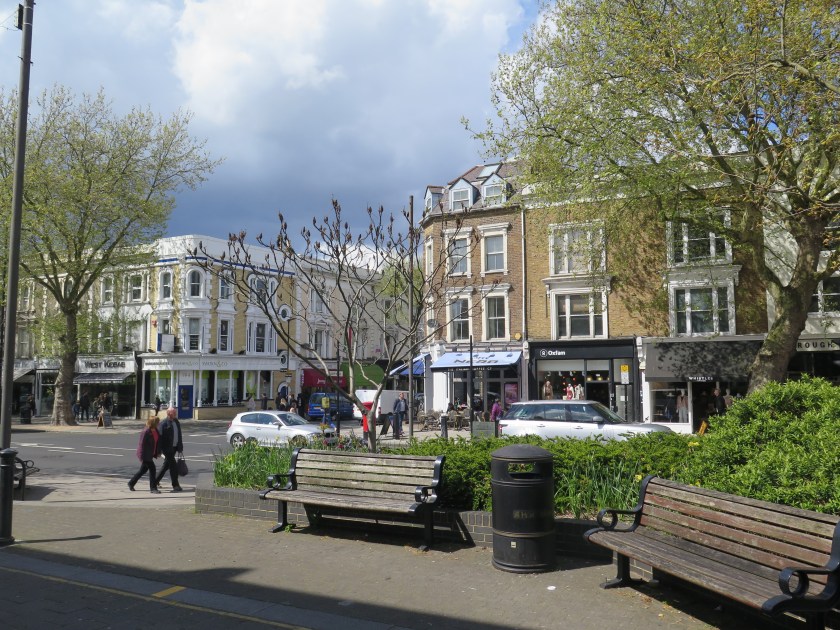
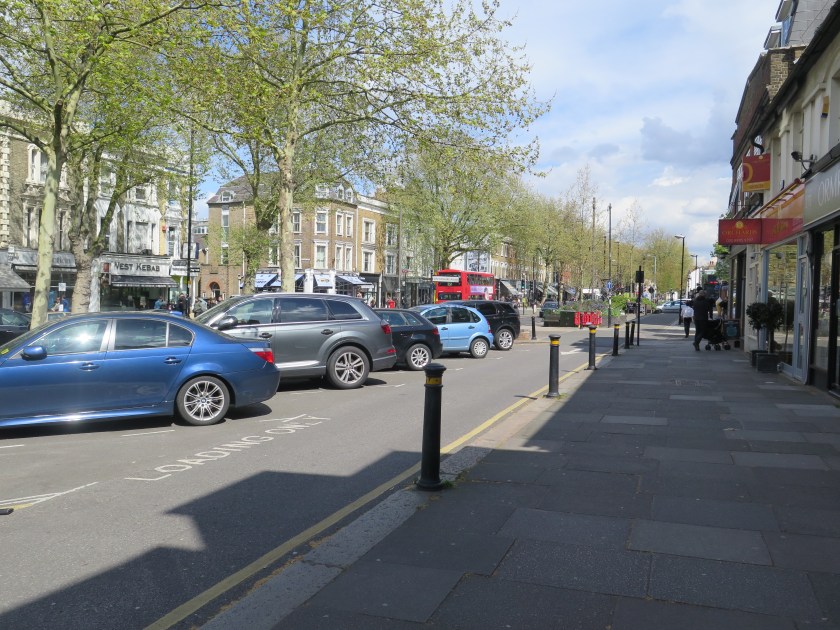
Great Street: Chiswick High Road – London.


Review: Ecodesign for Cities and Suburbs
Originally published on April 19, 2016 in the Journal of Urban Design
By Ann Forsyth
Ecodesign for Cities and Suburbs is the work of two practitioners turned academics. Jonathan Barnett, emeritus Professor of Practice at the University of Pennsylvania, has practised internationally and is the author of five previous books, starting with the classic Urban Design as Public Policy (Barnett 1974). Larry Beasley, currently a Distinguished Practice Professor of Planning at the University of British Columbia, retired from government service in 2006 after over a decade as Director of Planning for the City of Vancouver. This appears to be his first book.
Ecodesign is a concept bringing together various ideas about good urban design and planning in a time of change. As the authors outline in the introduction, eco-design is:
A way of looking at cities and their hinterlands that integrates considerations of environmental soundness and resilience with human health and well-being. it is an attitude about how the city needs to be built or transformed, but also managed and operated, to find harmony between urban systems and natural systems in a way that also contributes to human experience and social life.
The authors elaborate on this concept through set of broad axioms about ecodesign related to managing complexity, promoting sustainable growth, using interdisciplinary processes, incorporating public involvement, respecting both natural and built context, and drawing on multiple design methods.
The book is organized around four broad ecodesign themes each with a major chapter: adapting to climate change; balancing transportation modes; developing more progressive regulations; and creating a better public realm. in covering this material Barnett and Beasley touch on a variety of topics from regional planning to housing affordability, from developing higher density areas for families with children to marketing new kinds of environments. As they explain:
Ecodesign concepts can inform the details of specific places, such as clusters of buildings, streets, and gathering areas. They can help mold the structure of neighborhoods, districts, and whole cities. They can guide the systems that handle the dynamics of full city regions. Ultimately, they can reconcile the human presence in in broad ecological zones: the setting for the city, its suburbs, and its rural hinterlands.
Among all these axioms and themes, the book’s main argument is that the exemplary should become commonplace. Barnett and Beasley point out that “urban growth is produced by the interaction of many component parts, and each of these components has been significantly improved somewhere. if all these improvements could be put together, they would produce a far different and superior growth pattern”. They see climate change ‒ sea level rise, storms, floods, droughts and fires – as an enormous threat needing urgent action in urban areas. As they conclude, “ecodesign, as an amalgam of environmental responsibility and progressive urban design ethic[s] and practice … must become the new status quo” (241).
The book covers a lot of familiar material. Reflecting the authors’ experiences there is a great deal about vancouver (“a partial success” [7]), substantial material on the US and other Canadian cities, and some relevant minor cases from elsewhere. The book provides a broad overview of topics such as climate change and the authors mention a few earlier books such as McHarg’s (1969) Design with Nature or Sprirns’ (1984) The Granite Garden. However, the main focus is on solutions and examples that seem based on direct experience; the book itself is minimally sourced so in order to find out more about various projects, programmes and policies the reader would need to go to google. However, it is not meant to be an academic book; rather, it reflects the wisdom and opinion of two experienced practitioners who have worked hard to change urban areas for the better. Barnett and Beasley very obviously want to share that experience in a relevant and updated way that engages with some of the large issues of our times, particularly related to climate change.
There are many ways books in this general subject area approach this task. They variously pro- pose specific guidelines and tools in some detail; have lavish photography and drawings; create strong and explicit theoretical or conceptual frameworks for creating better cities; or translate research evidence into lessons for urban areas. This book does none of these, at least in great detail. Barnett and Beasley certainly make it obvious that the world is facing large ecological challenges requiring regional and local solutions; higher densities and more balanced transpor- tation will help make urban areas better; public spaces need to be well crafted for both people and nature; and implementation requires better interactions between public and private interests and better coordination within governments. The book is illustrated, although more in some chapters than others, and the lengthy captions really add to the overall readability of the book. However, it is written as a narrative reflection on lessons learned from years of experience rather than a specific set of guidelines or a tight proposal for a model community.
Peter Hall’s (2014) Good Cities, Better Lives, with contributions from practitioner Nicholas Falk, covers very similar material from a european perspective. Ecodesign for Cities and Suburbs is some- what more based on experience and general knowledge, but there are many parallels in content and tone. while i did not agree with every one of Barnett and Beasley’s interpretations or pro- posals, generally their approach has much to admire and reflects a very deep understanding of how difficult it is to change the trajectory of a large urban area. i liked the term ‘ecodesign’ ‒ so much better than yet another ‘-ism’. They point to many examples of better design and planning already implemented that may be modest individually if pulled together in one place could make a difference. This core argument of the book is something that would make sense to the public and political leaders who are key in any change. overall this is a thoughtful compendium of examples from an experienced team with much to offer urban design.
References:
Barnett, Jonathan. 1974. Urban Design as Public Policy. New York: Architectural Record Books. Hall, Peter. 2014. Good Cities, Better Lives. London: Routledge.
McHarg, ian L. 1969. Design with Nature. New York garden City: Natural History Press.
Spirn, Anne whiston. 1984. The Granite Garden. New York: Basic Books.
Ann Forsyth
Department of Urban Planning and Design, Harvard Graduate School of Design, Cambridge, MA, USA
aforsyth@gsd.harvard.edu
Connecting a City to the Water: Baker Program’s Inaugural Trip to Vancouver, Part One
Larry Beasley, center, leads the group along the waterfront walkway
By Jason W Henderson
This article was originally published on the website of Cornell University’s Baker Program in Real Estate
In March 2016, second-year students in the Baker Program in Real Estate embarked on a trip to Vancouver, British Columbia to meet with the people and companies that have played a hand in shaping Vancouver into the celebrated international city it is today. Starting with a bold plan hatched in the 1980s to connect the city to its waterfront, Vancouver has spent the following decades on a transformation spree that is the envy of urbanists the world over. Throughout a five-day itinerary, students visited the projects and neighborhoods that epitomize this transformation.
The trip began by meeting at the waterfront with Larry Beasley, former Co-Director of Planning for the City of Vancouver. Beasley was instrumental in driving the City’s efforts to build the seawall, the pedestrian and bike paths along the water, and in crafting the zoning and developer requirements that would allow for the appropriate density, housing types, and public spaces. The resulting development has been coined “Vancouverism,” a planning movement that has spawned inspiration in hundreds of other cities across the globe.
Beasley spoke of specific measures such as mandating the right amount of space between towers so that occupants aren’t uncomfortable (90 feet), and requiring ground floor uses of retail in the right areas, as well as townhouse-style housing product along the edges of residential towers that are popular with families moving from less-dense neighborhoods. Underground parking also provides for efficient land-use without the impediment of parking lots or lost floors above-ground. The urban form along the waterfront has also been carefully designed to allow for large view corridors so that residents along the waterfront and further-inland are able to see the water. The spaces are ideal for streetscapes, parks, and openings that enhance the pedestrian experience, and provide residents with public amenities right at their front doorstep.
View corridor Split bike and pedestrian paths
Another challenge is how to manage the two modes of travel along the waterfront. No- not cars! But pedestrians and cyclists. The waterfront paths are split between bike and pedestrian modes, with the pedestrian path along the edge of the seawall, which is embellished with ample trees, planters, and benches so that residents may enjoy the water at their leisure, or get to where they’re going with ease. The split helps to keep accidents to a minimum, and the flow of travel at the right pace.
In addition to parks and open space, the waterfront development included the construction of a new school and playground so that local residents could easily raise children in the area without the need of a car or bus to deliver their children to school. The convenience factor and space programming was intended to “crack the nut” on getting suburban families into the City- and it succeeded. Beasley, the team at the City, and the waterfront developers came together with the public at large to determine what was necessary to drive interest in families to move to the City through hundreds of public meetings, thousands of private consultations and conversations, and a marketing effort that played directly to each housing group.
Through a strategy of transparent and open engagement, Vancouver developed the model for comfortable and sustainable urban living. Though a City of over 600,000 (2.3 million in Metro-area), Vancouver can be comfortably traveled across by foot or bike in the fraction of an afternoon, and the City is consistently ranked as one of the most livable cities on the planet by a range of publications. Newer developments such as the Olympic Village area even incorporate their own greywater-recycling and efficient power and heating as a whole integrated system- the City even boasts its own steam district, and new transit stations have recently opened to continue expanding the light-rail network. The City is a shining example of what can go right in a City’s development when parties come together collaboratively, and effectively.
Part Two will explore the history behind the 1986 World Expo site, and Concord Pacific’s development along the waterfront.
Exit interview: NCC adviser Larry Beasley on surviving the Harper government
This article was originally published in the Ottawa Citizen on March 27, 2016.
By Don Butler
When Larry Beasley stepped down earlier this month after 12 years as chair of the National Capital Commission’s advisory committee on planning, design and realty, he posted this tweet:
“Through all the trials of the last government, the @NCC-CCN remains strong, caring and innovative. I am sad to finish this assignment!”
Since joining the advisory committee in 2000, the 68-year-old Beasley, one of Canada’s most eminent planners and urban designers, has quietly helped shape virtually every federal project in the capital. He’s no Larry-come-lately. So both his departure and his parting words are worth noting.
That reference to the trials of the former Conservative government, for instance. What’s that about?
“The last government looked at the NCC and its role of custodianship of capital interests differently than previous governments,” Beasley says. Previous governments often delegated responsibilities to the NCC. “The last government felt they wanted to pull some of those things back to the centre of government.”
One of those things was the management of new monuments, notably the proposed Memorial to the Victims of Communism. Another was responsibility for programming, which, Beasley says, “was a very strong and innovative part of the NCC for many, many years.”
The period of Conservative rule, he says, was a “difficult time” for the NCC. The highly political victims of communism memorial is a case in point.
Beasley had never encountered a government that just said: “We’re deciding on the site and we’re carrying forward and we’re not going to go through the normal process that makes sure those things are the right scale and the right nature and the right quality.
“They had their own agenda, they carried forward with it, and they did that in part by how they shifted responsibilities for those things,” Beasley says. “But they also did it in part by just deciding they were going to do it in a particular way.”
Beasley, who lives in Vancouver and works on projects around the world, is pleased the Liberal government is relocating the victims of communism memorial to another “decently high-profile” location. “And, frankly, I’m very happy there will be a new (design) competition.”
Monuments and memorials, he says, “tell a story about our country and about us as a people. And we have to be careful about that.”
The Conservative government’s strong-arm tactics had no impact on the advisory committee’s deliberations, Beasley says. “We were very clear that our job was to give the best advice for the country, not to meet any political agenda of the day.”
Not that there was never any pressure to toe the line. “There’s always a sense of pressures,” Beasley acknowledges. “Governments are powerful. Prime minister’s offices are powerful.”
But the advisory committee’s members are independent-minded and “a little immune to pressure,” he says. “We’re not there all the time, we don’t have vested interests (and) we don’t have really anything to lose.”
Beasley never felt any direct pressure. “No one ever came to me and said, ‘Boy, you’d better do this right or you’re out of here.’
“But there were times when people said, ‘This is a top government priority – you don’t want to stand in the way of this,” he said. “We said, ‘Yes, but getting the best should also be a top priority,’ and we would stand our ground.”
Though it only advises the NCC and has no decision-making power, the committee’s expertise has made it extremely influential. Its advice is accepted most of the time.
The committee took the plan to develop LeBreton Flats from a “fairly mundane project to a much more sustainable concept,” Beasley says. It had a big impact on the Zibi development in its conceptual stages and had input into signature projects, including the rehabilitation of the Parliament Buildings.
“I know that we have improved the urban design of many, many projects,” Beasley says. “The aspiration is that the capital be a bit of a model in the country for an intelligent, sustainable development of a city, and I think we tried to do that.”
One high-level project Beasley and the committee considered numerous times was 24 Sussex Drive, the official residence of the prime minister.
“There’s no question it needs a complete overhaul,” he says.”It’s been an embarrassment to the country that the prime minister’s residence has portable air conditioners in the windows and things like that.”
Though the NCC is still trying to decide whether the house should be fixed up or replaced, Beasley strongly favours renovation.
“I’ve heard the argument that it’s an opportunity to express the best architectural mastery in the country, and there’s some merit to that,” he says. “But I think there’s a strong symbolism in 24 Sussex that’s very important to reminding people of the long history of our country and our democracy.”
If it was purely Beasley’s decision, he’d happily carry on with his work on the committee. But his term had already been extended by a couple of years. “They felt it was time to bring other representation.”
He’s hardly retiring, however. He’s doing work in Dallas, Rotterdam and Scandinavia, and is just starting a project in Canberra, Australia’s capital. “I’m a busy person.”
He hopes to have some continuing involvement in Ottawa, as well. “I’ve come to love the city,” he confesses, “and anything to contribute to the capital is a good thing to me.”
The thoughts of (ex) Chairman Larry
- City building is a very complicated thing and you can’t guess it all right. You have to be courageous and try things.
- When a development is in the phase that LeBreton Flats is in right now, a lot of people are critical of it. If the first move isn’t absolutely splendid, they become negative about the whole thing. Once the thing builds out and they can begin to see the formation of a real community, all that starts to change. I think that will change there.
- Victims of Communism was a contentious monument. It did not make sense to a lot of people. It certainly did not make sense to vest that kind of image, regardless of what it was trying to say, next to the most important images of our national government.
- Capitals are always in a process of transformation, because the culture and governance of countries is always in a process of transformation, and the capital needs to reflect that. A capital city is always an unfinished art.
- Parliament Hill, to me, is an extraordinary thing. It needs to be protected and nurtured. In 150 or 200 years, people need to be able to see the same thing and remember where it came from.
Opinion: Canada needs an new vision for the suburbs
The following article appeared in the Vancouver Sun on October 30, 2015.
By Larry Beasley
Suburbs — they are the most dramatic phenomenon of city growth since the onset of the Industrial Revolution. Enabled by the mass availability of the automobile and growing household wealth, they stretch out over the landscape in almost every modern city as far as the eye can see and the mind can comprehend. They have a vast footprint and very low scale and intensity. They waste space; they gobble up nature; they homogenize the urban experience. Professional planners and city designers speak of them as profoundly unsustainable, impossible to provide with services, socially exclusive, and personally alienating. For the last half century, they have been anathema to any progressive, forward-looking view of how to build cities for the future. Even the name has been a negative expression: “SUB-urb”, less than a city, not quite what it should be, a lower form of living.
Q&A: How Ottawa bungled its plan for a new monument-Macleans
In conversation with urban design guru Larry Beasley on the lessons we can learn from Ottawa’s plans for the victims of communism memorial
http://www.macleans.ca/politics/ottawa/qa-how-ottawa-bungled-its-plan-for-a-communism-monument/
By John Geddes
Now available-ECODESIGN FOR CITIES AND SUBURBS: A NEW BOOK BY LARRY BEASLEY AND JONATHAN BARNETT
Purchase Here: http://islandpress.org/ecodesign-for-cities-and-suburbs
Photo Gallery
About the Firm
The foundation of Beasley and Associates is Larry Beasley’s long and primary involvement in the transformation of Vancouver into one of the world’s most pleasant and beloved cities. His planning emphasizes the “city by design” and a focus on sustainable, liveable and appealing urbanism, with particular expertise in higher density, mixed use, inner city development.
Together, he and his team provide advice on urban design, policy planning, advanced systems of development regulation and management and related tools that incentivize preferred urban forms and garner public goods. Beasley also specializes in group facilitation and interest-based problem solving. Producing charettes to engage interested parties and experts in expedited planning is a related specialty.
Beasley and Associates offers its clients a unique, holistic perspective in addressing problems and opportunities of the environment and the city. The firm generally works in consortium with larger planning, architecture and landscape architecture firms, providing special expertize and leadership, and emphasizing top quality production. Professional highlights include:
-
Founding the Urban Planning Council in Abu Dhabi, UAE, now one of the most progressive planning agencies in the Middle East
-
Founding the Urban Design Studio with the City organization of Dallas, Texas, shifting the design culture of that community
-
Crafting a completely new vision for Brampton, Ontario, which is helping to redefine sustainable suburbs in Canada
-
Addressing quality growth of small cities via the setting of a new plan for Prince Rupert, British Columbia
-
Helping to set new directions for Toronto, Ontario’s Planning Department
-
Designing completely new national capital districts in Abu Dhabi and Moscow, Russia